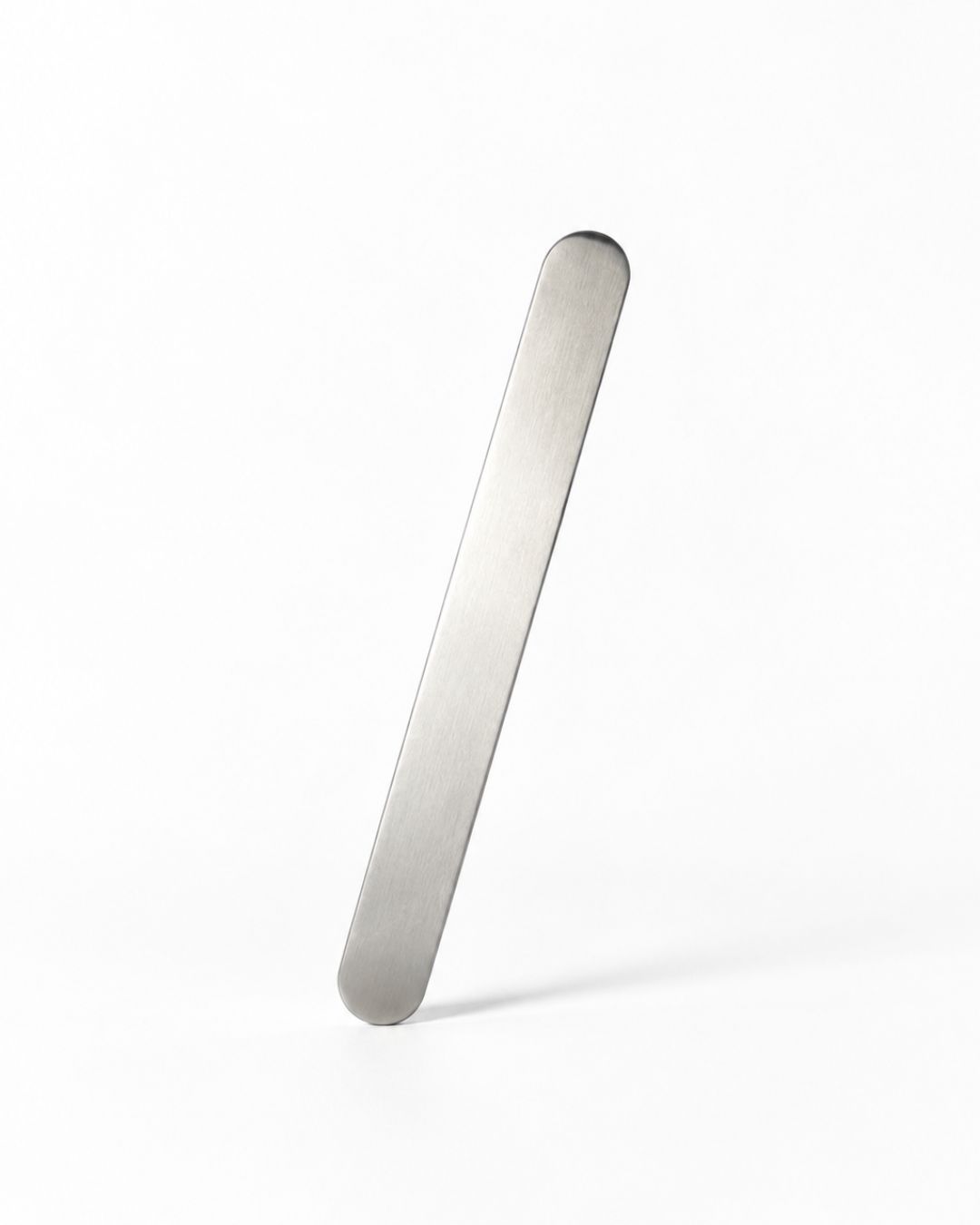
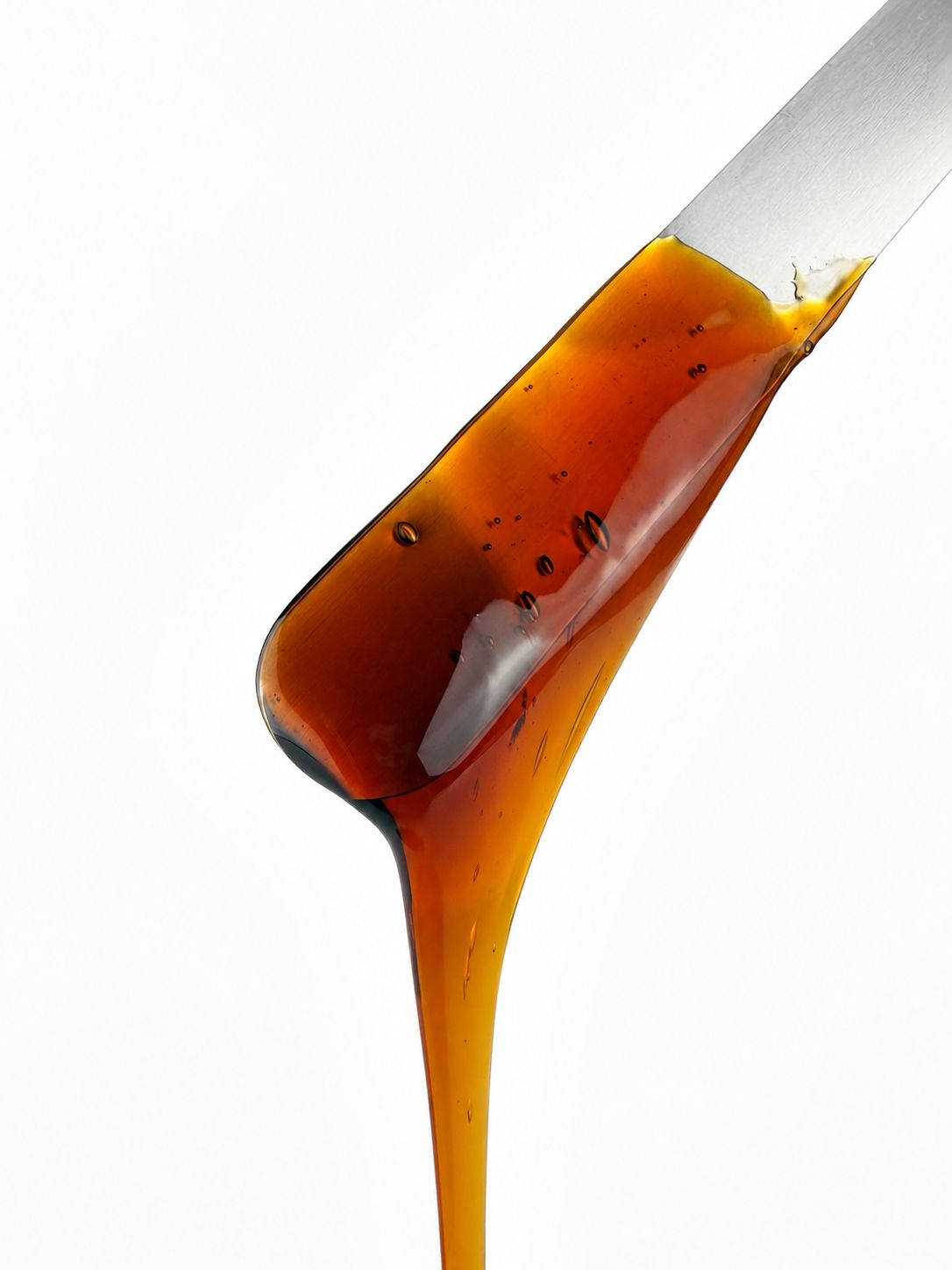
Sugaring is method of hair removal that uses a simple sugar-based paste to remove hair from the root.
If you have heard it called sugar waxing, sugar wax, or sugaring paste, the based idea is the same: a concentrated mixture – traditionally made primarily from sugar, water and an acid such as lemon juice – is applied to the skin, allowed to grip the hair and then removed, taking the hair with it.
The concept is remarkably simple.
The science behind it is little more interesting.
And despite recent popularity of sugaring on social media, removing hair with sugar is far from new.
Sugar-based hair removal is commonly associated with ancient Middle Eastern and North African beauty traditions, where removing body hair formed part of grooming and personal-care practices.
Historical versions were not necessarily identical to the carefully formulated sugaring pastes available today. Recipes, ingredients and techniques varied by place and time, and similar methods are known by different names across the region.
But the underlying idea endured:
Cook sugar with water and acid until it becomes a concentrated, sticky material capable of gripping and removing hair.
It is a surprisingly sophisticated use of an extremely ordinary ingredient.
Over time, sugaring developed into several different techniques, including traditional hand-moulded pastes and softer formulations that can be removed with fabric or paper strips.
Today, sugaring is performed professionally in salons and increasingly used for at-home hair removal.
Sugar is dissolved in water and heated. An acid is usually added, which changes some of the sucrose into simple sugars through a process called inversion.
As the mixture cooks, water evaporates and the concentration of dissolved sugars increases.
That concentration matters enormously.
Anyone who has made caramel or candy has already seen the basic principle at work.
A sugar solution containing more water is relatively fluid. Remove enough water and it becomes thicker and stickier. Continue concentrating it and, once cooled, it can eventually become extremely firm.
Sugaring paste takes advantage of that relationship between sugar concentration, temperature and texture.
By controlling the formulation and cooking process, sugar can be transformed from a pourable syrup into a material with enough body to be spread across the skin and used for hair removal.
Hair is made primarily of keratin and grows from follicles within the skin.
When we shave, the hair it cut at or close to the skin’s surface. The portion of the hair inside the follicle remains.
Sugaring works differently.
The paste surrounds and grips the exposed hair. When the hair is removed correctly, enough force is transferred to the hair to pull the entire shaft from the follicle.
That is why the skin feels smooth immediately after sugaring: there is no short section of hair remaining above the surface.
It also explains why the results generally last much longer than shaving.
The follicle much produce another hair and the hair must grow far enough to become visible at the skin’s surface.
For many people, visible results can last approximately 2-6 weeks, although this varies considerably with the body area, individual growth rate and where each hair happens to be in its growth cycle.
One of the most useful things to understand about sugaring is that your hairs are not all growing at exactly the same time.
Individual follicles move through different stages of the hair-growth cycle.
This is why you can remove every visible hair today and notice new hairs appearing relatively soon afterwards.
Those hairs have not necessarily grown all the way back in a few days.
Some were slightly at a different stage of their growth cycle and were not yet visible when sugared.
This is also why consistent root hair removal can make the experience seem more predictable over time. As you establish a routine, you become better able to remove hairs at useful stages of growth rather than waiting until every possible hair is visible.
No.
Removing hair from the root does not cause the replacement hair to become thicker simply because it was sugared.
This is quite different from the appearance of regrowth after shaving.
A razór cuts across the hair shaft, leaving a blunt end. As that hair emerges, the blunt tip can make it feel coarse or stubbly.
A naturally growing hair has a tapered end, so regrowth following root removal often feels softer.
With repeated root hair removal, some people also notice that certain areas become less dense over time. Repeated removal can affect individual follicles, although the degree of long-term reduction varies significantly from person to person and should not be confused with permanent hair-removal treatments.
There is another practical reason sugar works so well for hair removal.
Sugar is water-soluble.
Sugaring paste is essentially a highly concentrated water-based sugar system rather than an oil-soluble resin.
That gives it one particularly useful property – water can dissolve it.
Residue left on the skin can generally be removed with warm water. The same is true for tools, reusable fabric strips and many accidental drips.
From an aesthetics perspective, this makes sugaring an unusually simple hair-removal material to work with.
There is not need to dissolve the product with oil or a specialised wax remover.
Any method that removes hair from the root places some temporary stress on the skin.
Immediately after sugaring, the area may appear slightly red or feel sensitive. Small areas of redness around individual follicles can also occur because the hair has just been physically removed from the follicle.
This usually settles.
Technique matters considerably.
The skin should be held taut during removal and the product should be removed close an parallel to the surface rather than pulled upward away from the body.
The goal is to remove the hair efficiently while minimising unnecessary pulling on the skin.
Good preparation matters too.
Clean, dry skin gives the sugar a better opportunity to interact with the hair without sweat, oils or skincare products interfering with its grip.
Sugaring removes hair, but healthy regrowth also depends on what happens between hair removal sessions.
As a new hair grows, it needs to travel through the follicular opening and emerge through the surface of the skin.
A buildup on dead skin cells around that opening can make this more difficult, particularly for coarse or curly hairs. Instead of emerging normally, a hair may become trapped beneath the surface or curve back into the skin.
That is one way ingrown hairs develop.
Appropriate exfoliation between sessions can help remove excess surface buildup, while regular moisturisation helps maintain the condition and flexibility of the skin.
The key is timing.
Freshly sugared skin does not need aggressive exfoliation. Give the area time to settle before resuming your normal exfoliation routine.
Not all sugaring is performed in exactly the same way.
The technique many people associate with traditional sugaring uses a relatively firm, moldable ball of paste.
The paste is worked across the skin by hand, typically applied against the direction of hair growth and flicked away with the direction of growth.
This technique can be extremely effective, but it has a learning curve. The consistency of the paste, temperature of the room, warmth of the hands and technique of the person performing the service can all influence how the paste behaves.
There are also softer forms of sugaring paste designed to be used with strips.
The sugar spreads across the skin, a fabric or paper strip is placed over it, and the strip is used to remove the sugar and hair.
The underlying goal remains the same:
Grip the hair effectively and remove it from the root.

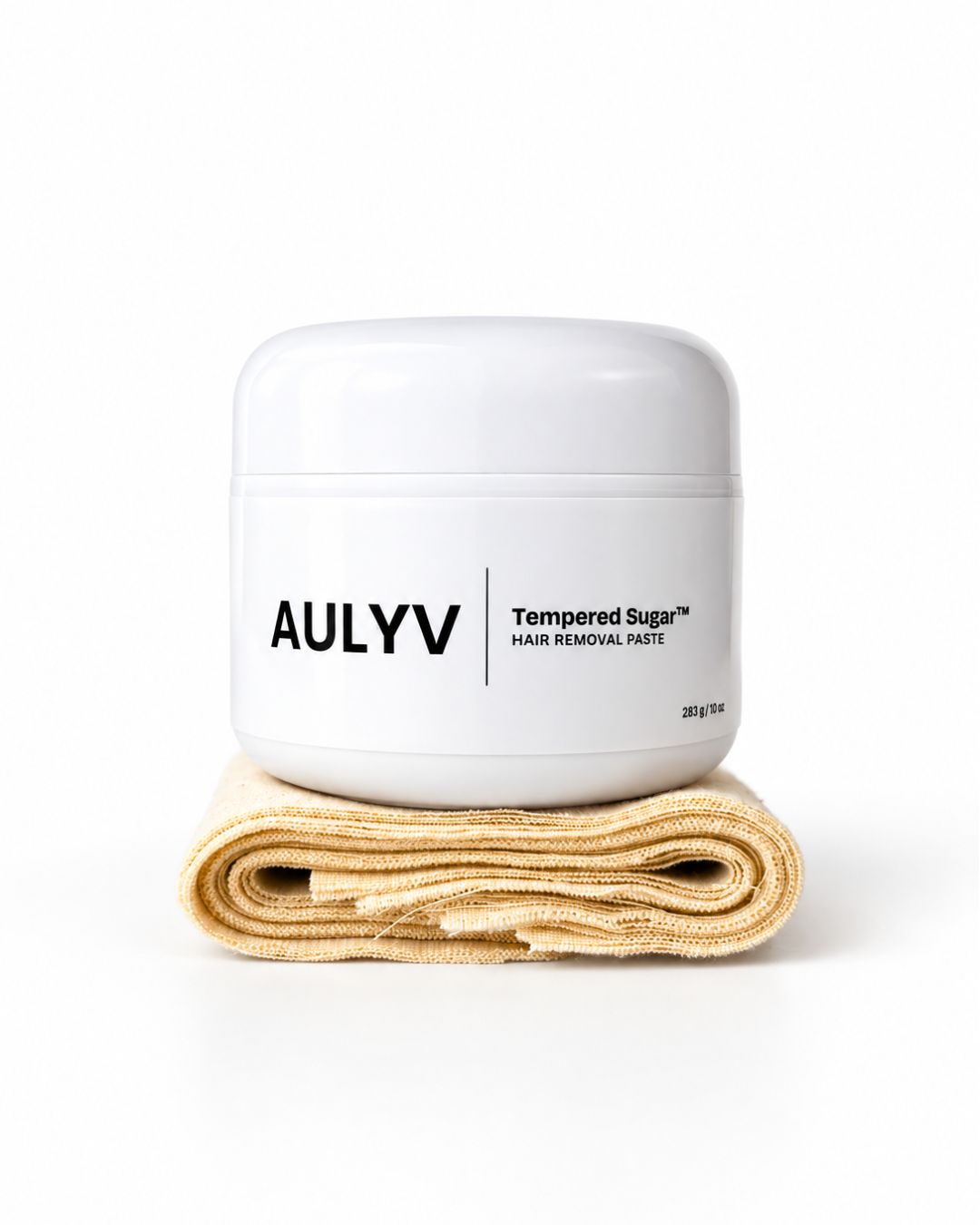
Tempered Sugar™ is our approach to modern at-home sugaring.
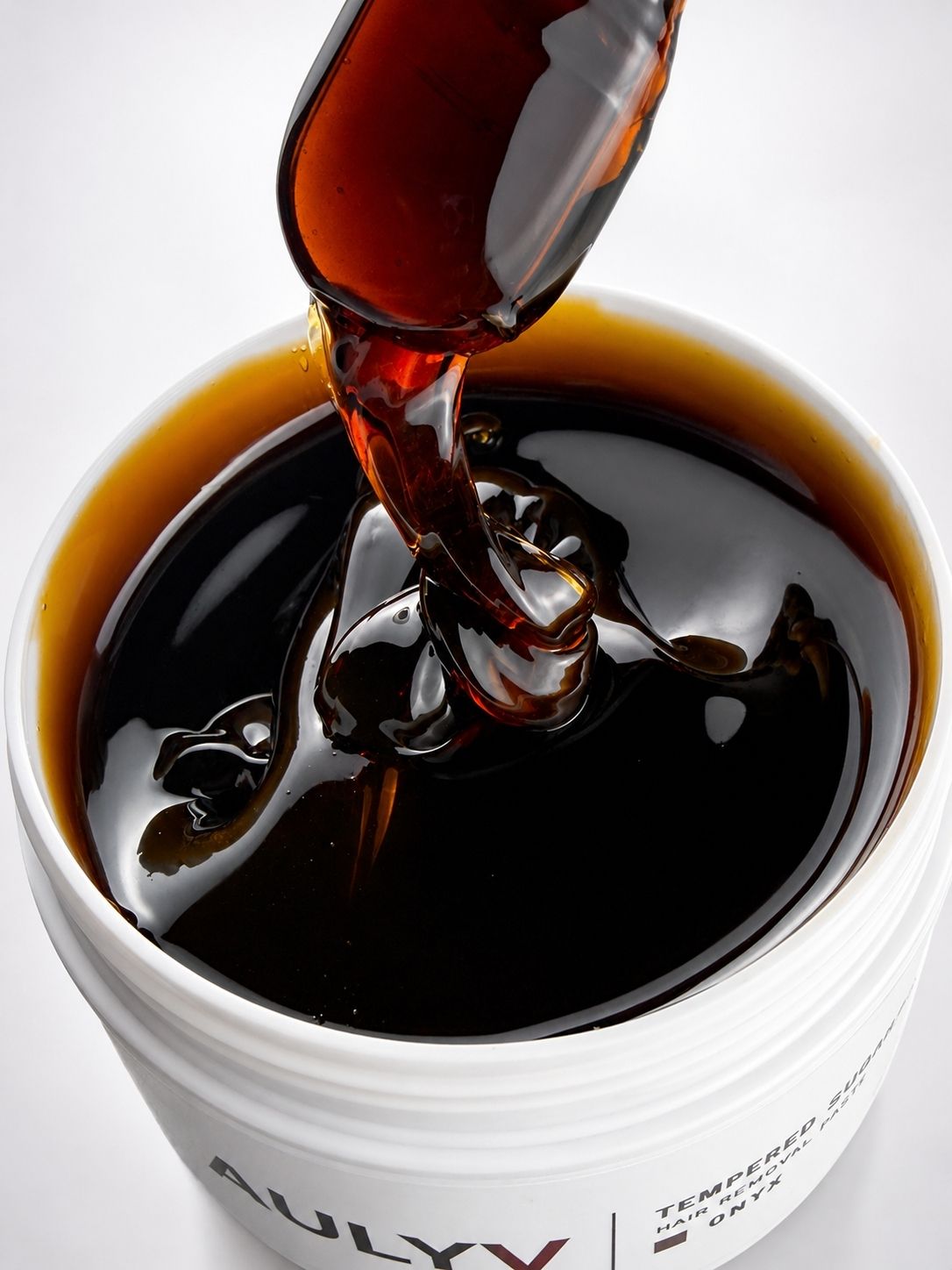
It is still fundamentally sugaring paste – a concentrated mixture of sucrose, water and citric acid – but its physical properties are deliberately controlled so that the paste remains spreadable rather than behaving like a traditional dough-like hand paste.
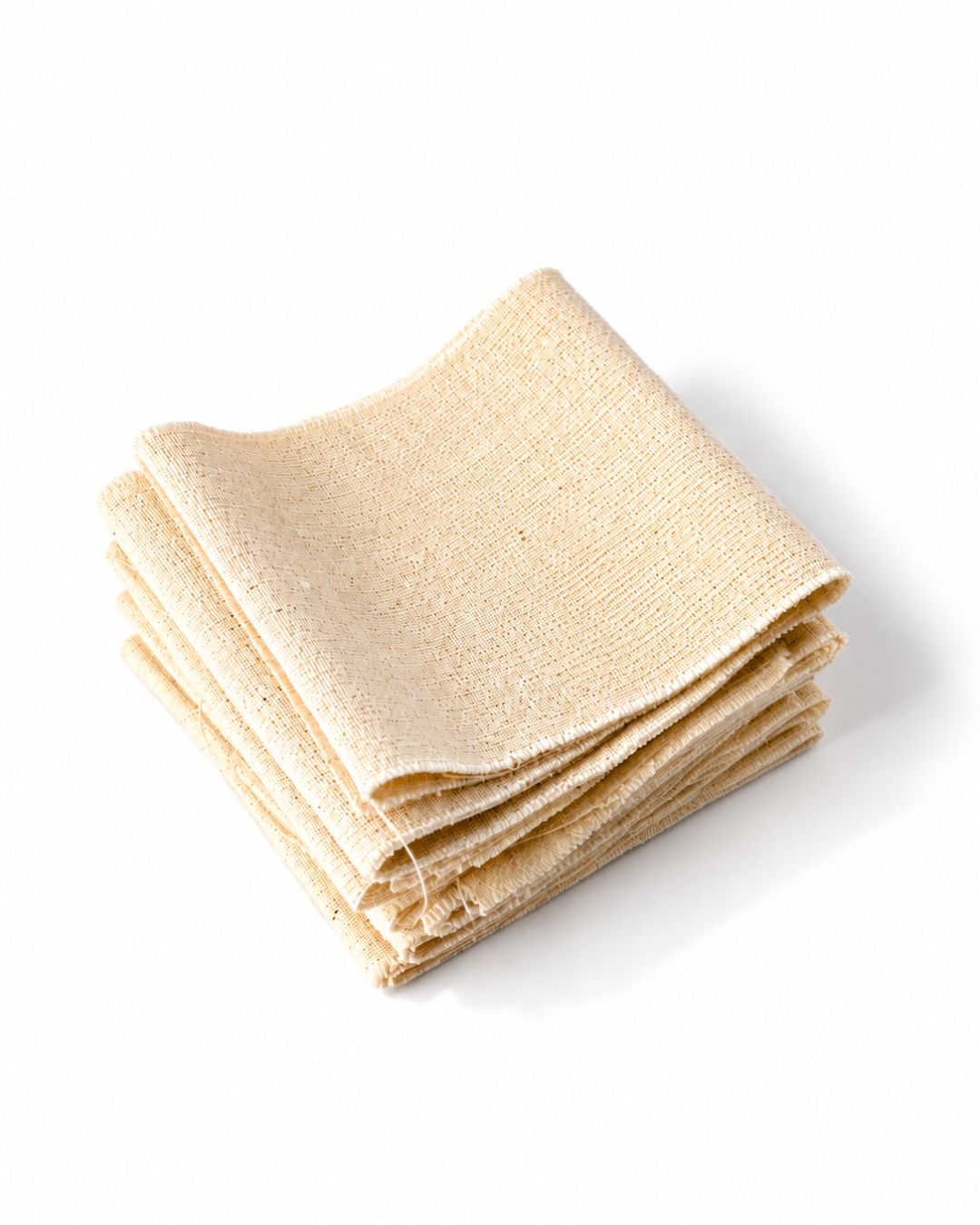
It is applied against the direction of hair growth using an applicator, worked into the hair, covered with a fabric strip and removed with the direction of growth.
The result is a method designed to retain the principles of sugaring while making the technique more approachable and repeatable for at-home hair removal.
Almost any external body area where unwanted hair grows can potentially be sugared, provided the skin is healthy and the technique and product consistency are appropriate.
Common area include:
Different areas can behave differently.
Fine hair across a large area such as the legs does not necessarily require the same amount of grip as deeply rooted, coarse hair around the underarms or pubic area.
This is one reason paste consistency matters.
Sugaring removes hair from the root, so pretending it is completely painless would be unrealistic.
There is a brief pulling sensation as the hair leaves the follicle.
How uncomfortable that feels depends on the area being treated, hair density and thickness, individual sensitivity, technique and how accustomed you are to root hair removal.
The first few sessions can feel more intense because there may be a greater number of mature hairs present.
For many people, the process becomes easier once they develop a consistent routine and become more confident with the technique.
The ingredient list may be simple.
The method is not quite a simple as putting something sticky on the skin and pulling.
Successful sugaring depends on several variables working together
Once those pieces make sense, sugaring becomes considerable less mysterious.
And that is really what this Sugaring 101 series is about.
Continue through Sugaring 101 for step-by-step guidance on choosing the right consistency, preparing your skin, warming your sugar, mastering the basic technique and caring for your skin between sessions.
Hair removal, made simple.